

How I Work: Acceptance & Commitment Therapy (ACT)
My primary therapeutic framework is Acceptance and Commitment Therapy (ACT) — an evidence-based approach that helps people build psychological flexibility: the ability to stay present, open, and engaged with what matters most, even when life is difficult.
Rather than trying to eliminate painful thoughts or feelings, ACT teaches you how to change your relationship with them — so they no longer control your choices or hold you back from living a meaningful life.
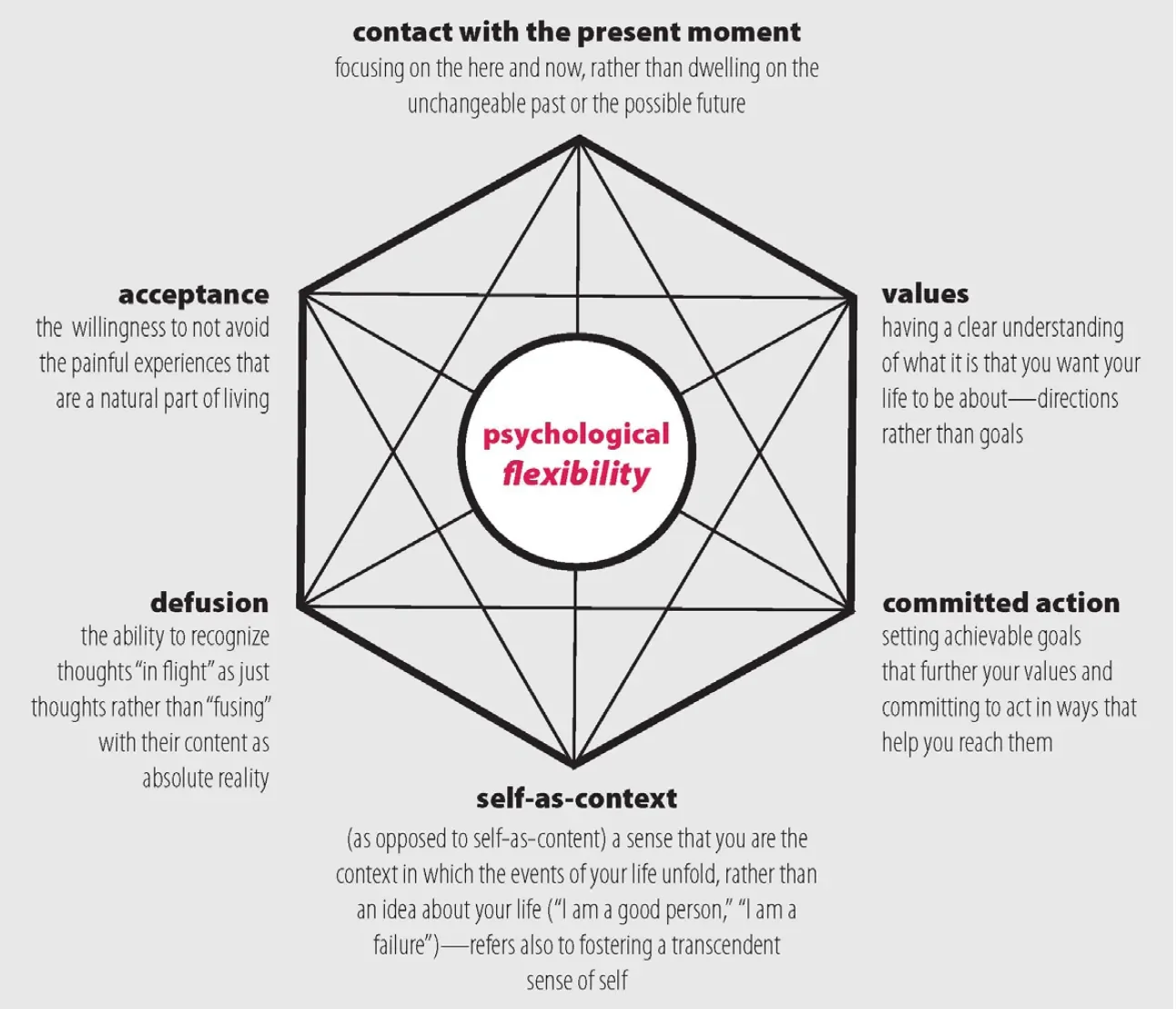
The Six Core Processes of ACT
1 Acceptance — Learning to allow difficult thoughts and feelings to come and go, without fighting them or running from them. Resistance often amplifies suffering; acceptance creates space.
2 Cognitive Defusion — Stepping back from unhelpful thoughts and seeing them for what they are: just thoughts, not facts. You are not your mind's commentary.
3 Present-Moment Awareness — Bringing full, flexible attention to the here and now, rather than replaying the past or dreading the future.
4 Self-as-Context — Developing an observer perspective: the part of you that can notice thoughts and feelings without being defined or consumed by them.
5 Values Clarification — Getting clear on what truly matters to you — not what you "should" want, but what gives your life genuine direction and meaning.
6 Committed Action — Taking purposeful steps toward a life aligned with your values, even in the presence of discomfort or uncertainty.
I also draw on Cognitive Behavioural Therapy (CBT), Narrative Therapy, and Collaborative Dialogue Approaches depending on your needs and goals.